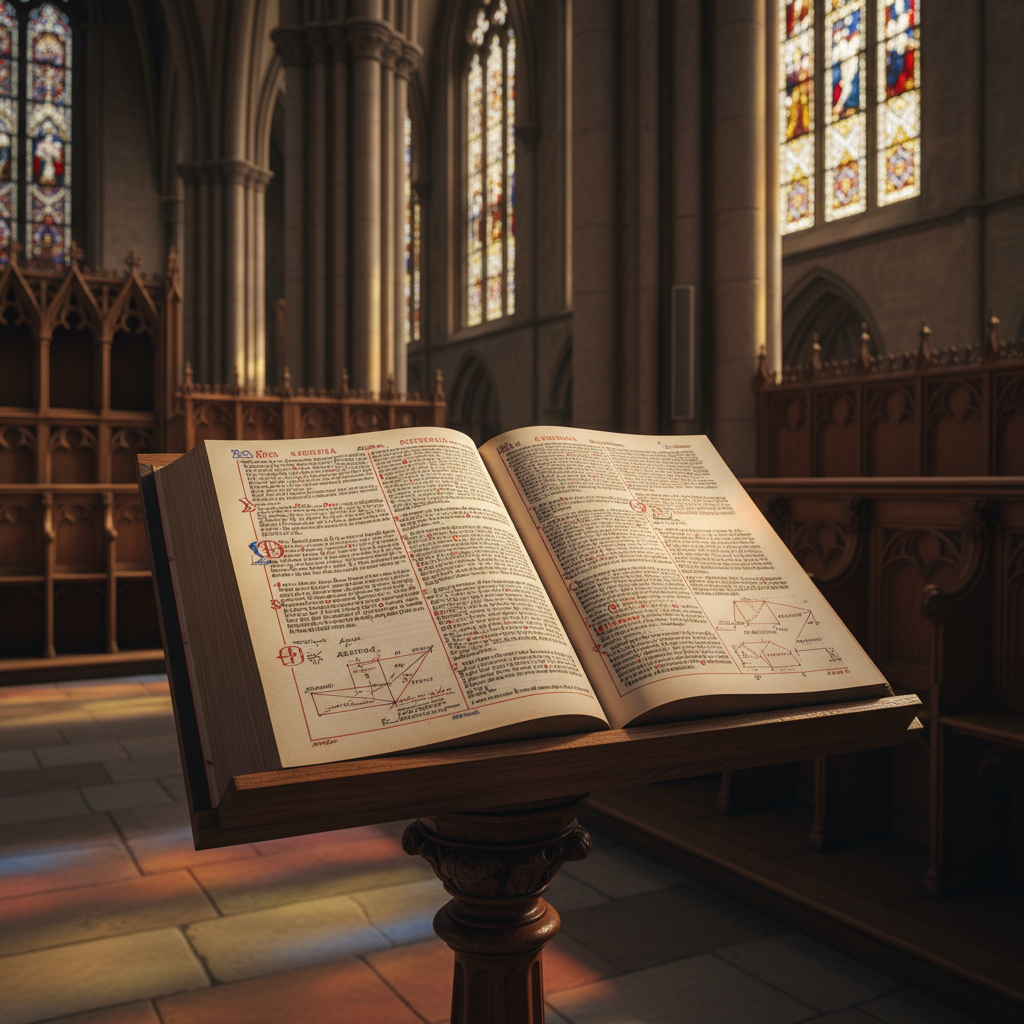
A polished wooden lectern stands in the choir of a Gothic cathedral, supporting a massive illuminated scholastic codex opened to a densely annotated page. The page shows narrow central text columns surrounded by elaborate marginal glosses, colored paragraph marks, and delicate hand-drawn diagrams of logical distinctions. Surrounding the lectern, empty carved choir stalls and towering stone columns recede into soft blur. Late-afternoon golden light filters through stained glass, scattering subtle colored reflections onto the parchment and stone floor. Captured at eye level, with the codex in crisp focus and the architectural background gently out of focus, the photographic image conveys a solemn, elevated, and sophisticated mood, emphasizing the union of faith, reason, and textual discipline.

Figures of Scholasticism

An introduction to the principal figures of scholasticism, their networks, conflicts, and significance in the history of ideas.

Thinkers

Here we gather the scholastics of the Middle Ages in a clear, navigable list, with concise presentations of their lives, works, and central ideas, so that you can more easily orient yourself among the tradition’s most important figures.
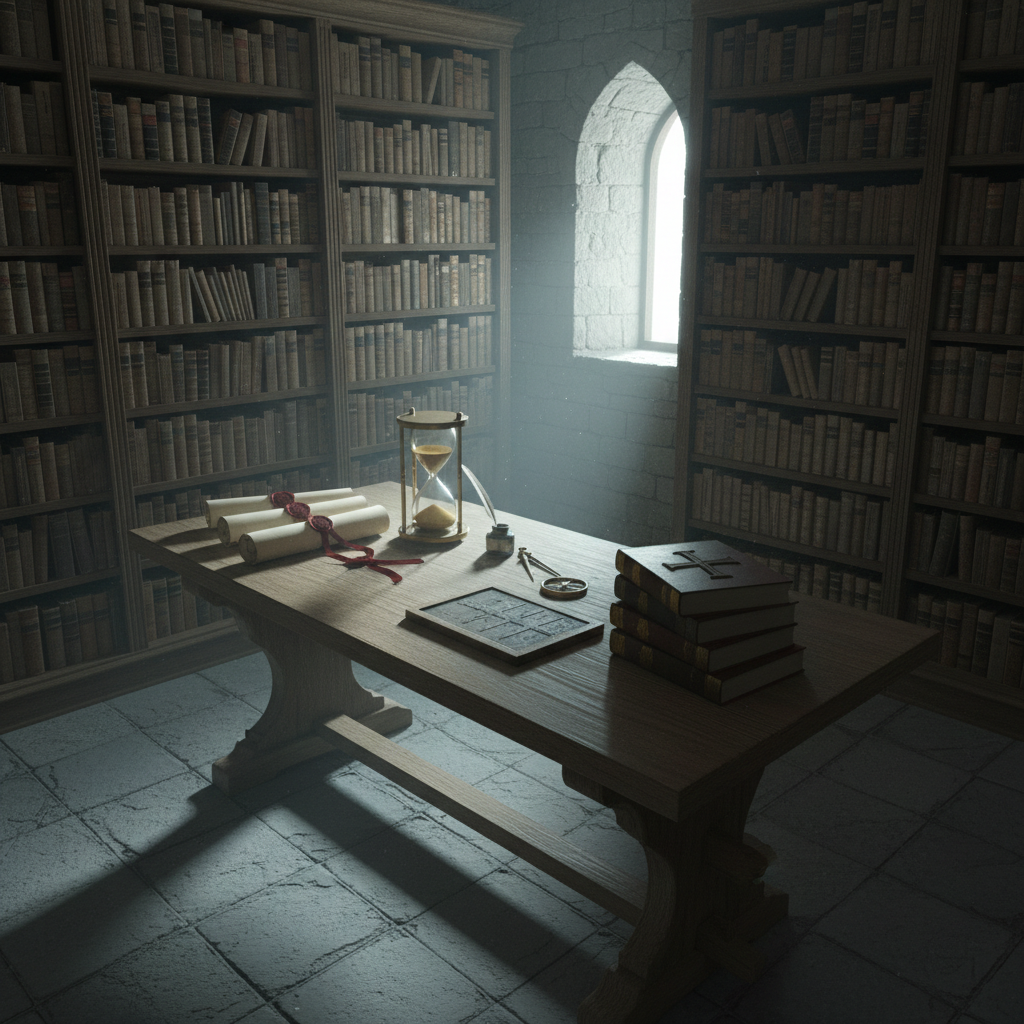
An orderly medieval study chamber without any human presence: a sturdy wooden table supporting a carefully arranged array of scholastic tools—parchment rolls tied with red silk cords, a sandglass half-run, a wax tablet with faint impressions, and a neatly organized stack of glossed theological commentaries. The room is enclosed by stone walls lined with tall shelves filled with uniformly bound manuscripts. Cool morning light filters in through a narrow arched window, casting long, precise shadows and illuminating faint dust particles in the air. Shot from a slightly elevated three-quarter angle in photographic realism, with sharp focus throughout, the scene feels serene, disciplined, and intellectually rigorous, reflecting the methodical spirit of scholastic inquiry.